





Your Passport to Precision: Exploring Asia’s Top Destinations Through Postal Codes
Navigating the vast, vibrant tapestry of Asia requires more than just a map—it demands a granular understanding of its urban labyrinths. For the savvy traveler, researcher, or logistics planner, knowing the exact best cities in asia to visit is just the first step. The real key to seamless navigation, precise shipping, and authentic local immersion lies in mastering the continent’s intricate system of postal and ZIP codes. This guide merges the thrill of discovery with the practicality of geographic data, offering a unique lens on asia travel destinations.
Materials & Supplies: The Traveler’s Toolkit
Before you even book a flight, assemble your digital and physical toolkit. Essential “supplies” include a reliable GPS app with offline maps, a universal power adapter, and—critically—a digital or printed database of destination postal codes. For serious planners, this means sourcing accurate ZIP code directories for countries like Japan, South Korea, and India. A sturdy travel wallet with compartments for documents, credit cards, and a small notebook for jotting down specific postal districts (like Bangkok’s unique “khet” and “khwaeng” codes) is invaluable. Don’t forget translation apps, as asking for “the postal code for the area near the temple” often yields better results than a street name alone.
Timing / Growing Schedule: When to Visit Which Code
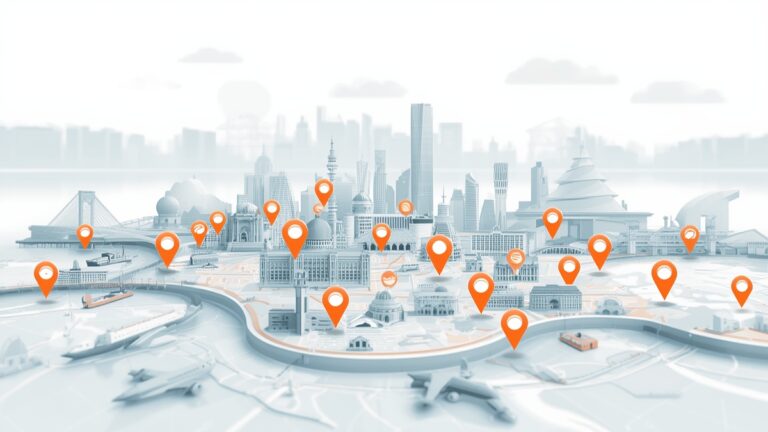

Asia’s climactic diversity means the “best” time to visit a city is often dictated by its postal region’s weather patterns. A ZIP code in Northern Japan (e.g., 060-0001 for Sapporo) will have a completely different optimal travel window than one in tropical Singapore (068809). Our growing schedule is a seasonal framework: Winter (Dec-Feb) is prime for Southeast Asia’s dry zones and ski resorts in the Korean Peninsula or Japanese Alps. Spring (Mar-May) brings cherry blossoms to codes 100-0001 (Tokyo) and 03080 (Seoul). Monsoon season (Jun-Sep) requires focusing on drier regions like Central Thailand or西藏 (Tibet). Autumn (Oct-Nov) offers clear skies and mild temps for almost every asia travel destinations.
30 Essential ZIP/Postal Codes for Top Asia Travel Destinations
Use this quick-reference table for planning. Note formats vary: some are numeric, some alphanumeric, and some use hyphens.
| City / Area | Country | Postal / ZIP Code | Key District / Note |
|---|---|---|---|
| Tokyo (Shibuya) | Japan | 150-0001 | Shibuya, Harajuku |
| Tokyo (Shinjuku) | Japan | 160-0021 | Shinjuku, Kabukicho |
| Tokyo (Asakusa) | Japan | 111-0032 | Asakusa, Senso-ji Temple |
| Osaka (Namba) | Japan | 542-0072 | Dotonbori, Shinsaibashi |
| Kyoto (Central) | Japan | 604-8001 | Gion, Kawaramachi |
| Seoul (Jongno) | South Korea | 03149 | Gyeongbokgung Palace, Insadong |
| Seoul (Gangnam) | South Korea | 06299 | Gangnam Station area |
| Seoul (Myeongdong) | South Korea | 04536 | Myeongdong shopping district |
| Busan (Haeundae) | South Korea | 48094 | Haeundae Beach |
| Beijing (Dongcheng) | China | 100009 | Forbidden City area |
| Shanghai (Pudong) | China | 200120 | Lujiazui, Bund opposite |
| Shanghai (Huangpu) | China | 200001 | The Bund, Nanjing Road |
| Guangzhou (Yuexiu) | China | 510030 | City center, Yuexiu Park |
| Bangkok (Rattanakosin) | Thailand | 10200 | Grand Palace, Old City |
| Bangkok (Sukhumvit) | Thailand | 10110 | Sukhumvit Road, Thonglor |
| Bangkok (Silom/Sathorn) | Thailand | 10500 | Business district, towers |
| Chiang Mai (Old City) | Thailand | 50000 | Historic center |
| Singapore (Central) | Singapore | 178957 | Orchard Road, Bras Basah |
| Singapore (Marina Bay) | Singapore | 018956 | Marina Bay Sands, Gardens |
| Kuala Lumpur (Bukit Bintang) | Malaysia | 55100 | Shopping & entertainment hub |
| Jakarta (Central) | Indonesia | 10110 | Menteng, Monas area |
| Jakarta (South) | Indonesia | 12190 | Kemang, expat area |
| Manila (Makati CBD) | Philippines | 1200 | Financial district |
| Manila (Intramuros) | Philippines | 1000 | Historic Walled City |
| Mumbai (South) | India | 400001 | Colaba, Gateway of India |
| Mumbai (Andheri) | India | 400053 | Western suburbs, airport |
| Delhi (Connaught Place) | India | 110001 | Central business hub |
| Delhi (South Extension) | India | 110049 | Upmarket shopping area |
| Hong Kong (Central) | Hong Kong | N/A (Street-based) | Use street: e.g., “Queen’s Road Central” |
| Taipei (Xinyi) | Taiwan | 110 | Taipei 101, business district |
Step-by-Step Instructions: Planning Your Postal-Code-Aware Journey

-
- Identify Core Interests: Are you chasing food stalls in Taipei’s 106, neon lights in Seoul’s 04333, or temples in Kyoto’s 600-8001? Start with your desired experience.
-
- Research Postal Hierarchy: Understand the local system. India uses 6-digit PINs, Hong Kong uses none for street delivery, Indonesia uses 5-digit “kodepos.” Use resources like best cities in asia to visit guides that break down districts.
-
- Pinpoint Accommodation & Logistics: When booking, note the hotel’s exact postal code. This aids in airport transfer quotes, emergency service location, and even predicting neighborhood character (e.g., Tokyo’s 150-0001= trendy Shibuya, 160-0021= upscale Aoyama).
-
- Integrate into Navigation: Input postal codes into Google Maps or local apps like Naver (Korea) or AMAP (China) for pinpoint accuracy, especially where English street names are inconsistent.
-
- Prepare for Shipping & Souvenirs: Need to ship a purchased rug from Istanbul (34122) or a kimono from Kyoto (604-8005)? Having the correct ZIP code is non-negotiable for customs and delivery.
Nutritional Benefits / Advantages: Why This Approach Feeds the Soul
Beyond logistics, this method offers profound travel “nutrition.” It fosters cognitive mapping—understanding how a city like Mumbai (400001 vs. 400050) is organically divided by postal wards deepens your connection to its socio-economic fabric. It reduces anxiety; knowing the postal code for your embassy or a recommended hospital (e.g., Bumrungrad Hospital in Bangkok’s 10110) is a security blanket. It unlocks hyper-local experiences: seeking out the best cha siu bao often means exploring specific asia travel destinations blocks within a city’s postal zone, not just the tourist center.
Tips or Advice: Pro Strategies for the Code-Savvy Traveler
-
- Carry a Dual-Format List: Save ZIP codes both digitally (notes app) and physically. In areas with poor data, show the code on paper to taxi drivers or shopkeepers.
-
- Use Postal Codes to Filter Accommodation: On booking sites, search by postal district to find hotels in your preferred zone (e.g., “Central” in Hong Kong’s 999077 vs. “Kowloon” 999077 is different).
-
- Leverage for Food Delivery: Apps like GrabFood (SEA) or Meituan (China) require precise postal codes. Ordering to your hotel’s code is a great way to sample local cuisine from your room.
-
- Shipping Home: Always confirm the destination country’s postal code format. For example, Singapore’s 6-digit (e.g., 238801) must be exact for international couriers.
Common Mistakes: Pitfalls to Avoid

-
- Assuming Uniformity: Believing all of Bangkok uses the same code is the #1 error. Metropolitan Bangkok has dozens, from 10100 (Chinatown) to 10250 (Sukhumvit).
-
- Ignoring Alphanumeric Systems: China (100080), UAE (Dubai 00000), and the Philippines (1000 Manila) mix letters and numbers. Copy them precisely.
-
- Using Tourist Area Codes for Shipping: The postal code for “Angkor Wat” area is often different from the Siem Reap town center code ( Siem Reap 17205 vs. Wat codes). Verify with your hotel.
-
- Overlooking Regional Nuances: In Taiwan, “ZIP code” (郵遞區號) is 3+2 digits (e.g., 100100 for Taipei Main Station area), but the last two are often omitted in daily use.
-
- Not Updating Sources: Postal codes change, especially in rapidly developing cities like Delhi or Jakarta. Always cross-check with the latest official postal service websites.
Storage / Maintenance Tips: Keeping Your Data Fresh & Safe
Treat your postal code database like perishable travel food. Create a master spreadsheet on your cloud drive (Google Sheets, Excel Online) with columns: City, District/Area, Postal Code, Notes (e.g., “Near Night Safari,” “Main commercial hub”). Update it after every trip. For security, store a encrypted backup on a password manager. Use tools like the Universal Postal Union’s (UPU) online directory to verify changes annually. When sharing itineraries, include the postal code in parentheses after the address to help fellow travelers.
Conclusion: The Journey is in the Details
Exploring best cities in asia to visit transforms from a simple checklist into a rich, layered expedition when you engage with their postal geography. This granular approach bridges the gap between the idealized postcard and the lived reality of a place. Whether you’re a tourist seeking the perfect bowl of ramen in Tokyo’s 112-0002 or a researcher mapping demographic trends, the humble ZIP code is your skeleton key. Embrace this technique, and you’ll navigate not just streets, but the very organizational soul of Asia’s most dynamic urban landscapes. Your next adventure in these extraordinary asia travel destinations starts with a number.
FAQs: Your Postal Code Travel Queries Answered
A: It ensures precise navigation, accurate shipping of souvenirs, easier emergency services location, and helps you book accommodation in your desired specific neighborhood rather than a vague city-center zone.
A: No. Postal codes are for mail and geographic addressing. Area codes (STD codes in India, area codes in the Philippines) are for telephone networks. They often overlap geographically but serve entirely different purposes.
A: The most reliable method is to use the official national postal service website (e.g., Japan Post, SingPost, China Post). Alternatively, use the address on a business card or booking confirmation; the postal code is almost always listed last or second-to-last in the local format.
A: Indirectly, yes. Transit maps and station exits are often labeled with the surrounding district’s postal code or major street name. Knowing the code for your destination (e.g., Seoul Station’s 04303) helps you confirm you’re exiting at the correct point for your final address.
A: Assuming the postal code for a city’s main tourist landmark applies to the entire metropolis. For instance, the code for the area around the Taj Mahal (282001) is not used for the entire city of Agra, which has multiple codes. Always get the exact code for your specific accommodation or point of interest.


