


The Traveler’s Decoder: Mastering UK postal codes & London postal codes
Your practical guide to navigating, shipping, and exploring with confidence
Materials & Supplies
To effectively research and utilize postal codes, equip yourself with these digital and physical tools:
-
- Official Postcode Finder: The Royal Mail’s Postcode Finder is the definitive, authoritative source for all UK postal codes.
-
- Interactive Mapping Services: Google Maps, Bing Maps, or Apple Maps. Input any postcode to see its exact location, neighborhood, and nearby points of interest.
-
- Dedicated Postcode Databases: Websites like Cartpostal.net offer searchable directories and bulk datasets for deeper geographic research.
-
- Offline Resources: A printable map of London postcode districts from the Ordnance Survey or a reliable travel guidebook as a backup.
-
- Smartphone with Data: A mobile device with offline map capabilities (download areas in Google Maps) is your most valuable on-the-ground tool.
Timing / Growing Schedule
Approach postcode research with a realistic timeline to maximize its utility without overwhelming your travel planning.
-
- Initial Deep Dive (1-2 Hours): Before your trip, spend time understanding the overall structure: the outward code (area/district) and inward code (sector/unit). Focus on your destination’s region first.
-
- Targeted Research (30 Minutes): For each specific accommodation, attraction, or restaurant, look up its exact postcode. Verify it on a map immediately to understand its precise location within a city.
-
- On-the-Ground Application (Ongoing): Use postcodes daily for navigation, asking locals for directions (“What’s the postcode for this station?”), and filling out forms for tours or deliveries.
-
- Expected Result: Within 24 hours of focused study, you’ll be able to look at a London postal code like “SW1A 1AA” and immediately know it refers to Buckingham Palace in the City of Westminster. This contextual awareness drastically reduces travel friction.
Top 30 ZIP Codes in London postal codes
| Postcode District | Primary Area(s) Covered | Notable Locations |
|---|---|---|
| EC1A | City of London, Clerkenwell | Barbican Centre, Smithfield Market |
| EC1M | Clerkenwell, Farringdon | Clerkenwell Road, Exmouth Market |
| EC1N | St. Luke’s, Old Street | Old Street Roundabout |
| EC1R | Clerkenwell | Granville Square |
| EC1V | Finsbury, Islington | Finsbury Square |
| EC1Y | City of London | London Wall |
| EC2A | City of London, Bishopsgate | Liverpool Street Station |
| EC2M | City of London, Broadgate | Broadgate Tower |
| EC2N | City of London | Bank of England |
| EC2R | City of London | Royal Exchange |
| EC2V | City of London | Leadenhall Market |
| EC2Y | City of London | St. Paul’s Cathedral |
| EC3A | City of London, Aldgate | Tower Hill, Tower of London |
| EC3M | City of London, Monument | Monument to the Great Fire |
| EC3N | City of London | Billingsgate Market |
| EC3R | City of London | Fenchurch Street Station |
| EC3V | City of London | Lloyd’s of London |
| EC4A | City of London, Fleet Street | St. Bride’s Church |
| EC4M | City of London, Temple | Royal Courts of Justice |
| EC4R | City of London | Chancery Lane |
| EC4V | City of London | Lincoln’s Inn |
| EC4Y | City of London | St. Paul’s Cathedral (North) |
| WC1A | Bloomsbury, Holborn | British Museum, University of London |
| WC1B | Bloomsbury | Russell Square |
| WC1E | Bloomsbury | Brunswick Centre |
| WC1H | St. Pancras, King’s Cross | St. Pancras International |
| WC1N | King’s Cross | Google UK HQ |
| WC1R | Holborn | Lincoln’s Inn Fields |
| WC1V | Clerkenwell (fringe) | St. John Street |
| WC1X | King’s Cross | Granary Square |
| WC2A | Covent Garden, Strand | Royal Opera House, Somerset House |
| WC2B | Covent Garden, Seven Dials | Neal’s Yard |
| WC2E | Holborn | Lincoln’s Inn |
| WC2H | Covent Garden | Lyceum Theatre |
| WC2N | Covent Garden | St. Martin’s Lane |
| WC2R | Strand | Royal Courts of Justice |
| E1 | Whitechapel, Stepney | Tower Bridge, Brick Lane |
| E1W | Wapping, Shadwell | Wapping High Street |
| E2 | Bethnal Green, Bow | Victoria Park, Brick Lane (East) |
| E3 | Bow, Poplar | East London Stadium |
| E4 | Chingford, Walthamstow | Walthamstow Wetlands |
| E5 | Clapton, Upper Clapton | Hackney Marshes |
| E6 | East Ham, Plaistow | East Ham Park |
| E7 | Stratford, Forest Gate | Queen Elizabeth Olympic Park |
| E8 | Hackney, Dalston | Hackney Empire |
| E9 | Hackney Wick, Homerton | Hackney Wick Stadium |
| E10 | Leyton, Walthamstow | Leyton Orient FC |
| E11 | Wanstead, Leytonstone | Wanstead Flats |
| E12 | Manor Park, Little Ilford | Manor Park Cemetery |
| E13 | West Ham, Plaistow | Boleyn Ground (former) |
| E14 | Canary Wharf, Isle of Dogs | One Canada Square |
| E15 | Stratford, West Ham | Stratford City |
| E16 | North Greenwich, Royal Victoria | The O2 Arena |
| E17 | Walthamstow | Walthamstow Market |
| E18 | Woodford, South Woodford | Epping Forest entrance |
| E20 | Stratford (Olympic Park) | Olympic Stadium, Westfield |
| N1 | Islington, Pentonville | Angel, Upper Street |
| N1C | King’s Cross (North) | Granary Square, Coal Drops Yard |
| N2 | East Finchley, Highgate | Alexandra Palace (fringe) |
| N3 | Finchley, Church End | Arcadia Centre |
| N4 | Finsbury Park, Manor House | Finsbury Park |
| N5 | Highbury, Canonbury | Emirates Stadium |
| N6 | Upper Holloway | Hampstead Heath (fringe) |
| N7 | Holloway, Archway | Holloway Road |
| N8 | Hornsey, Crouch End | Hornsey Town Hall |
| N9 | Edmonton, Upper Edmonton | Edmonton Green |
| N10 | Muswell Hill | Muswell Hill Broadway |
| N11 | Friern Barnet, New Southgate | New Southgate Cemetery |
| N12 | Friern Barnet, North Finchley | North Finchley |
| N13 | Southgate, Palmers Green | Southgate Tube |
| N14 | Oakwood, Southgate | Southgate Circus |
| N15 | South Tottenham | Tottenham Cemetery |
| N16 | Stoke Newington, Dalston | Abney Park Cemetery |
| N17 | Tottenham, Northumberland Park | Tottenham Hotspur Stadium |
| N18 | Upper Edmonton, Silver Street | Meridian Water |
| N19 | Upper Holloway | Archway Tower |
| N20 | Friern Barnet, Whetstone | Whetstone High Road |
| N21 | Winchmore Hill, Southgate | Fortis Green |
| N22 | Wood Green | Wood Green Shopping City |
| NW1 | Regent’s Park, Camden Town | Camden Market, London Zoo |
| NW1A | St. John’s Wood | Abbey Road Studios |
| NW1B | Regent’s Park | Regent’s Park |
| NW1C | Lisson Grove | Madame Tussauds |
| NW1D | Marylebone | Baker Street |
| NW1E | St. John’s Wood | St. John’s Wood High St |
| NW1H | Camden Town | Camden Lock |
| NW1J | King’s Cross (North) | Camden Road |
| NW1L | Kentish Town | Primrose Hill |
| NW1M | Chalk Farm | The Roundhouse |
| NW1P | Regent’s Park | Lord’s Cricket Ground |
| NW1R | Hampstead (fringe) | Hampstead Heath (South) |
| NW1T | Belsize Park | Hampstead Heath (Central) |
| NW1V | West Hampstead | West Hampstead Thameslink |
| NW1W | Kilburn, West Hampstead | Kilburn High Road |
| NW1X | Hampstead | Hampstead Village |
| NW1Y | St. John’s Wood | St. John’s Wood |
| NW2 | Willesden, Cricklewood | Willesden Green |
| NW3 | Hampstead, Swiss Cottage | Hampstead Heath, Jacksons Lane |
| NW4 | Hendon, Golders Green | Hendon Aerodrome |
| NW5 | Kentish Town, Camden | Kentish Town Market |
| NW6 | Kilburn, West Hampstead | Kilburn Grange Park |
| NW7 | Mill Hill | Mill Hill Broadway |
| NW8 | St. John’s Wood, Lisson Grove | Abbey Road (West) |
| NW9 | Kingsbury, Wembley Park | Wembley Stadium |
| NW10 | Willesden, Harlesden | Roundwood Park |
| NW11 | Hampstead Garden Suburb, Golders Green | Hampstead Garden Suburb |
| SE1 | Waterloo, Southwark, London Bridge | Tower Bridge, Borough Market |
| SE1P | London Bridge | The Shard |
| SE1V | Southwark, Bermondsey | Shakespeare’s Globe |
| SE1X | Southwark | Southwark Cathedral |
| SE1Y | London Bridge | London Bridge Station |
| SE2 | Abbey Wood, Plumstead | Abbey Wood Station |
| SE3 | Blackheath, Greenwich | Blackheath Village |
| SE4 | Lee, Hither Green | Hither Green Cemetery |
| SE5 | Camberwell, Peckham | Camberwell Grove |
| SE6 | Catford, Hither Green | Catford Broadway |
| SE7 | Eltham, Well Hall | Eltham Palace |
| SE8 | Deptford, New Cross | Deptford market |
| SE9 | Eltham, Mottingham | Eltham High Street |
| SE10 | Greenwich, Deptford | Royal Observatory, Cutty Sark |
| SE11 | Kennington, Elephant & Castle | Imperial War Museum |
| SE12 | Catford, Downham | Downham Fields |
| SE13 | Deptford, Lewisham | Lewisham Shopping Centre |
| SE14 | New Cross, Goldsmiths | Goldsmiths University |
| SE15 | Peckham, Nunhead | Peckham Rye Park |
| SE16 | Rotherhithe, Bermondsey | Canada Water |
| SE17 | Kennington | Kennington Park |
| SE18 | Woolwich, Plumstead | Royal Arsenal |
| SE19 | Crystal Palace, Anerley | Crystal Palace Park |
| SE20 | Penge, Anerley | Penge West Station |
| SE21 | Dulwich, Sydenham | Dulwich Picture Gallery |
| SE22 | East Dulwich | East Dulwich Tavern |
| SE23 | Forest Hill, Sydenham | Horniman Museum |
| SE24 | Lewisham | Lewisham Town Hall |
| SE25 | South Norwood, Thornton Heath | South Norwood Country Park |
| SE26 | Thornton Heath, Norbury | Thornton Heath Pond |
| SE27 | West Norwood, Tulse Hill | West Norwood Cemetery |
| SW1 | St. James’s, Westminster | Buckingham Palace, St. James’s Park |
| SW1A | Whitehall, St. James’s | Buckingham Palace, Clarence House |
| SW1E | Belgravia | Belgrave Square |
| SW1H | Westminster | Houses of Parliament |
| SW1P | Pimlico, Millbank | Tate Britain |
| SW1V | Victoria, Belgravia | Victoria Station |
| SW1W | Pimlico, St. George’s Square | St. George’s Square |
| SW1X | Belgravia, Pimlico | Eaton Square |
| SW1Y | St. James’s | Jermyn Street |
| SW2 | Brixton, Stockwell | Brixton Market |
| SW3 | Chelsea, Fulham | King’s Road, Saatchi Gallery |
| SW4 | Clapham, Stockwell | Clapham Common |
| SW5 | Earl’s Court | Earl’s Court Exhibition Centre |
| SW6 | Fulham, Parsons Green | Craven Cottage (Fulham FC) |
| SW7 | South Kensington, Knightsbridge | Natural History Museum, Harrods |
| SW8 | South Lambeth, Nine Elms | Vauxhall City Farm |
| SW9 | Stockwell, Brixton | Brixton Windmill |
| SW10 | West Brompton, Earl’s Court | West Brompton Cemetery |
| SW11 | Balham, Wandsworth Common | Wandsworth Common |
| SW12 | Clapham South, Balham | Clapham Junction (fringe) |
| SW13 | Roehampton, Barnes | Roehampton Club |
| SW14 | Putney, Roehampton | Putney Bridge |
Step-by-Step Instructions
Follow this actionable process to integrate postcodes seamlessly into your travel workflow:
-
- Identify Your Core Need: Are you verifying an address for a hotel booking, finding the nearest tube station to a museum, or sending a postcard? Your goal dictates the level of detail needed.
-
- Access a Primary Source: Use the Royal Mail Postcode Finder or a trusted aggregator like UK postal codes database. Enter the street name, town, or landmark.
-
- Isolate the Outward Code: The first part (e.g., “EC1” in EC1A 1BB) tells you the main postal town and district. For London, this immediately narrows the area to a specific part of the city (e.g., “EC” is Central London, “SW” is South West).
-
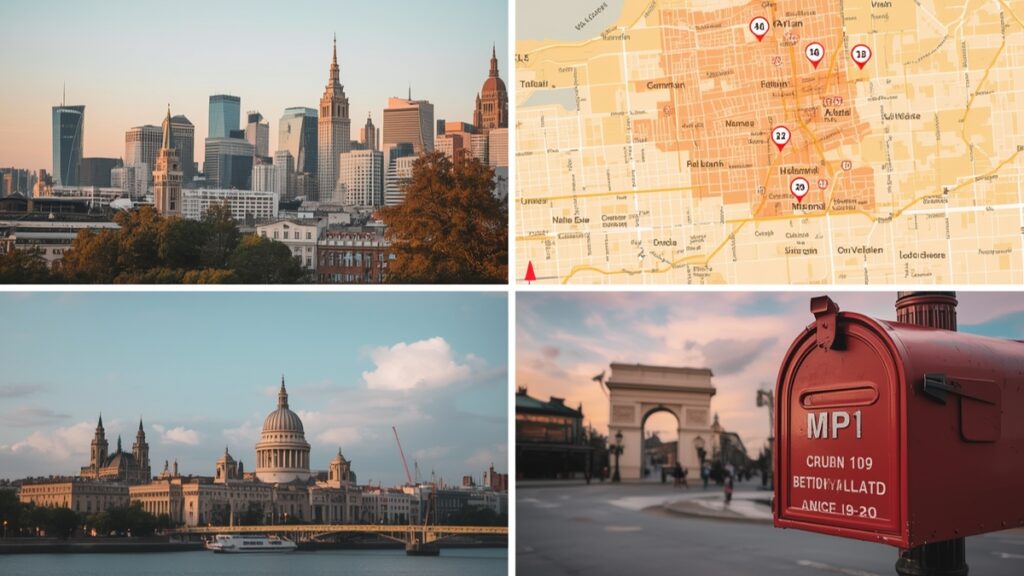
- Cross-Reference with Visuals: Input the full postcode into Google Maps. Observe the pin’s location, surrounding streets, and borough boundaries. This visual step is critical for understanding London postal codes, which do not always align with administrative boroughs.
-
- Create Your Personal Cheat Sheet: Compile a list of key postcodes for your itinerary: accommodation, main transit hubs, must-see attractions, and emergency services. Save this note on your phone.
-
- Practice verbally: Learn to say the postcode clearly (e.g., “SW one A”) to avoid confusion when giving directions to taxi drivers or shopkeepers.
Nutritional Benefits / Advantages
Why should the modern traveler prioritize this? The advantages are substantial:
-
- Precision Navigation: Eliminate ambiguity. A postcode points to a specific segment of a street or even a single building, superior to a street name alone in a sprawling city.
-
- Seamless Logistics: From booking airport transfers to receiving online shopping deliveries to your hotel, a correct postcode is non-negotiable for smooth operations.
-
- Local Integration: Using postcodes like a local signals experience and preparedness. It helps you use ride-hailing apps, find businesses in directories, and access location-based services.
-
- Time & Cost Efficiency: Avoid getting lost, incorrect taxi fares, or failed deliveries. A small investment in postcode knowledge saves significant time and money.
-
- Safety Net: In an emergency, providing your exact postcode to authorities or emergency services can shave critical minutes off response times.
Tips, Alternative Methods, or Advice
-
- Use Postcode-to-Area Apps: Apps like “Postcode Anywhere” or “UK Postcode” let you enter a postcode to instantly see the area name, borough, and map.
-
- Memorize Key London Sectors: Know that “W1” is Central West London (Mayfair, Soho), “EC1” is the City and Clerkenwell, “SE1” is Bankside and London Bridge. This mental map is invaluable.
-
- Leverage Wikipedia: The Wikipedia page for “London postal codes” contains exhaustive lists and geographic maps that are perfect for preliminary research.
-
- Ask for the Full Postcode: Always ask “What’s the full postcode?” not just the area. “W1” covers a huge area; “W1K 1AA” gets you to a specific building in Mayfair.
-
- For Landmarks: Major attractions often have unique, famous postcodes (e.g., 10 Downing Street is SW1A 2AA). Memorize these for your top sights.
Common Mistakes to Avoid
-
- Confusing Postcode with Borough: London’s 32 boroughs and the City of London do not align neatly with postcode districts. For example, the “SE1” district covers parts of Southwark, Lambeth, and the City of London. Always verify on a map.
-
- Omitting the Space: The standard format is “OUTWARD INWARD” with a space (e.g., “W1A 0AX”). Writing “WA10AX” can confuse systems and people.
-
- Using Outdated Codes: Postcodes can change due to new developments or Royal Mail reorganizations. Always use a current, official source, not an old guidebook.
-
- Assuming ZIP Code Equivalence: Do not try to map US ZIP codes (numeric, by region) directly to UK postcodes (alphanumeric, by street segment). The logic and granularity are completely different.
-
- Relying on Memory Alone: Unless it’s a famous landmark code, always double-check. A single typo (e.g., “N1” vs “NI”) leads to a completely different part of the city.
Storage / Maintenance Tips
Your postcode data isn’t a one-time task:
-
- Centralize Your Data: Keep a master list (in a note-taking app like Evernote or Google Keep) of all verified postcodes for your trip. Tag them by category (Sleep, Eat, Explore).
-
- Bookmark Official Sources: Save the Royal Mail Postcode Finder and Cartpostal’s UK postal codes page for quick access during your travels.
-
- Update Before Major Trips: Re-verify all addresses 48 hours before departure. Accommodations or venues may have changed management or postal details.
-
- Sync Across Devices: If you use a travel planning app (like TripIt or Google Travel), ensure postcode notes are synced to your phone, tablet, and laptop.
-
- Post-Trip Archive: After your journey, save the list. It becomes a valuable personal database for future trips or for recommending places to friends.
Conclusion
Mastering UK postal codes is not a bureaucratic chore; it’s a strategic travel skill that empowers you with precision, confidence, and local know-how. From the moment you plot your itinerary to the final postcard you mail home, these codes are your silent guides. The complexity of London postal codes, often intimidating at first glance, becomes a logical map of neighborhoods when you understand the outward/inward system. By using the reference table below, practicing the steps outlined, and avoiding common pitfalls, you turn postal data into a practical superpower. The journey from bewildered tourist to savvy navigator begins with a single postcode lookup.
Ready to decode your adventure? Use the comprehensive table of London codes below to start building your personal travel database. Then, explore our ultimate UK Postal Codes Master Guide for deeper insights, global comparisons, and interactive tools.
